Posts

Postmoderinst era

The postmodernist era of art work represents a new take on traditional art with a modern lens that distorts people’s expectations of art.   Previously pieces of art were easily understood from the audiences’ point of view.   Both ages of realism and modernism were time periods where art was still being experimented with, but the structural form did not cause major controversy for the viewers and art critics.   Postmodern medium for art includes almost anything ranging from paints on canvas all the way up to advertisements and physical billboards.   Postmodern artists use their talents to create art that from everyday objects that makes outsiders question what they indeed are looking at.   Some examples of postmodern artists are Andy Warhol and Jean Baudrillard.   The screen prints of Cables chicken noodles by Andy Warhol reinvented how people perceive the everyday soup cans simply by repeating the same image and altering the colors each...

Photoshop Advertisement

Image
In the Photoshop advertisement assignment for class I decided to play with the words turn the original ad into an ironic parody.  Instead of using the word pumpkin I replace the main ingredient with "Pumped Up".  The goal of the new advertisement is to turn the frozen yogurt desert into an exercising supplement.  I also added people who were lifting weights to further reinforce the athletic spin on the original advertisement.  To incorporate a more athletic scene I paired the people lifting weights with a nutrition label.  My intent for the new advertisement is for the audience to get a sense of energy from the ad's active and nutritional persona.   

Reflection on BMA Trip

Image
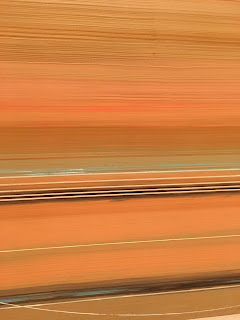
Last week the 2-D Design class visited the Baltimore Museum of art to study and appreciate works of art that engaged the student and theme of the class.  When wondering around the BMA looking for pieces of art to examine, I found it especially hard to sit down and admire art on the more classical side.  Once, I reached the modern art section my eyes immediately latched on to American artist Edward Clarks piece "Earth Signs".  The painting "Earth signs" roughly 10ft by 15ft instantly reminded me of the deserts in Phoenix Arizona.  Each line spread across the canvas reminded me of heatwaves rising in an empty desert.  The circular line that acts somewhat like a boarder and prevents my eyes from falling off the canvas.  The turquoise, sand, and clay colors further my feelings of being alone in the desert, but although I am alone I still feel comforted by the size and colors of the painting. The second painting I encountered that absorbed me was "Evening...

Ways of Seeing

The way we take in and perceive the world is not limited to our abilities of sight.  To fully understand the the world we live in, the people we encounter, and our impressions of art our senses of sight can not fully encapsulate the intrinsic essence of those things.  Once the camera was invented images could be replicated and shared without any issues.  Now we can be exposed to a variety of images that would otherwise have gone unseen.  Our other senses impact our impressions of what we are viewing.  What we hear, what we see, what we feel, what we taste, and what we smell helps us not only as people, but as artists.  

Visibility Response

Trying to fully understand the complexities behind the human imagination is still unclear, yet every day we subconsciously exercise our imaginations.  In the reading Calvino discusses the two types of imagination we perceive.  First, he discusses the imaginative process from words to vision.  Most commonly we encounter these types of imaginations when we read.  When people look at words on a page the discourse they are reading automatically paints a picture in the individuals mind.  The second type of imagination Calvino discusses is from sight to words.  Those types of imaginations are oftentimes applied when the eyes cross with a piece of cinema.  After viewing a visual representation of something the observations resinate in the views mind and can be later visited.  Both types of imaginations although they stem from an initial source the original version is instantly tainted by the viewers own aesthetic.   One aspect of the article that...

Reflection on "The Whole Ball of Wax" By: Jerry Saltz

Image
The word art has just as many definitions as it does people trying to define it.  After reading "The Whole Ball of Wax" my original view of art started to expand and become more receptive to the infinite possibilities art has the potential to be.  Prior to reading this article I oftentimes took art just for the way the artist had presented it.  In order for the viewer to gain a deeper perspective on the art they are engaged with they must use not only their own experiences, but think about the world around them and how that impacts the art they perceive.  The world or "Ball of Wax" constantly moulds and forms to the ever-changing events happening all around us.  The artists job is to channel those experiences and encounters they have with the world and use them as a catalyst to express their art. Art encapsulates the essential practices for a viewer to gain a deeper understanding not only about the world around them but most importantly themselves.  The w...